
You bend to lift a laundry basket, twist toward the back seat, or stand up from a chair you’ve used a thousand times, and your back catches. A few careful days later it eases, and you forget about it until it strikes again three months on.
After a few rounds of that, it’s natural to decide your back is simply unreliable. This guide shows why it isn’t random, what is happening underneath, and what actually breaks the cycle.
Key takeaways
- A back that keeps “going out” usually has a joint that stopped moving through its full range.
- Muscles and neighboring segments compensate, so you can feel nothing for weeks, then an irritated spot flares.
- A chiropractic adjustment restores motion at the stuck segment. It is not about the pop.
- Between-visit movement and rebuilding load decide whether the result holds.
- Dr. Mina Iskander treats this in Orange and Culver City.
Is your back stuck in this loop?
- The same awkward movement triggers it every few months.
- It eases within days, so you never get it checked.
- The pain seems to start “out of nowhere.”
- Each flare lands in a slightly different spot.
What is happening underneath
A joint in your spine or pelvis loses range. A slip, a car accident, a bad lift or a season of sitting still can cause it, or it can creep in with no clear cause. Your body then covers for it: muscles take on jobs they weren’t built for, a neighboring segment moves more than it should, and one hip carries more than the other. The restriction and the compensation are there long before the symptom.
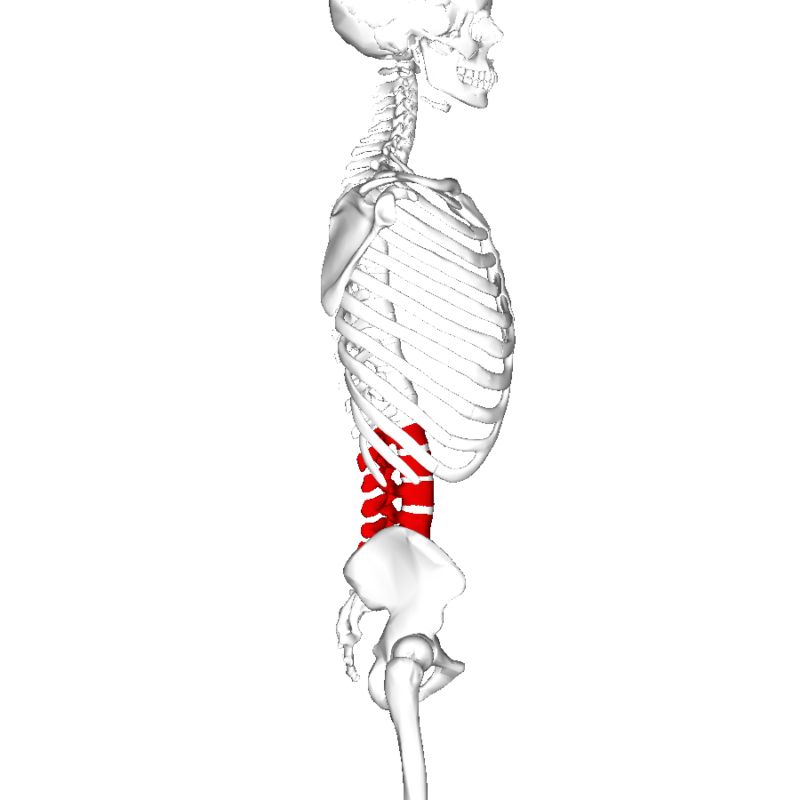
Then the protective pattern kicks in. Irritated tissue tightens, the joint gets used less, and your nervous system keeps that new pattern after the pain fades because it feels safe. So the flare settles, the restriction remains, and the next awkward tilt repeats the story. “It went away on its own” almost always means it quieted down, not that it resolved.
What an adjustment really does
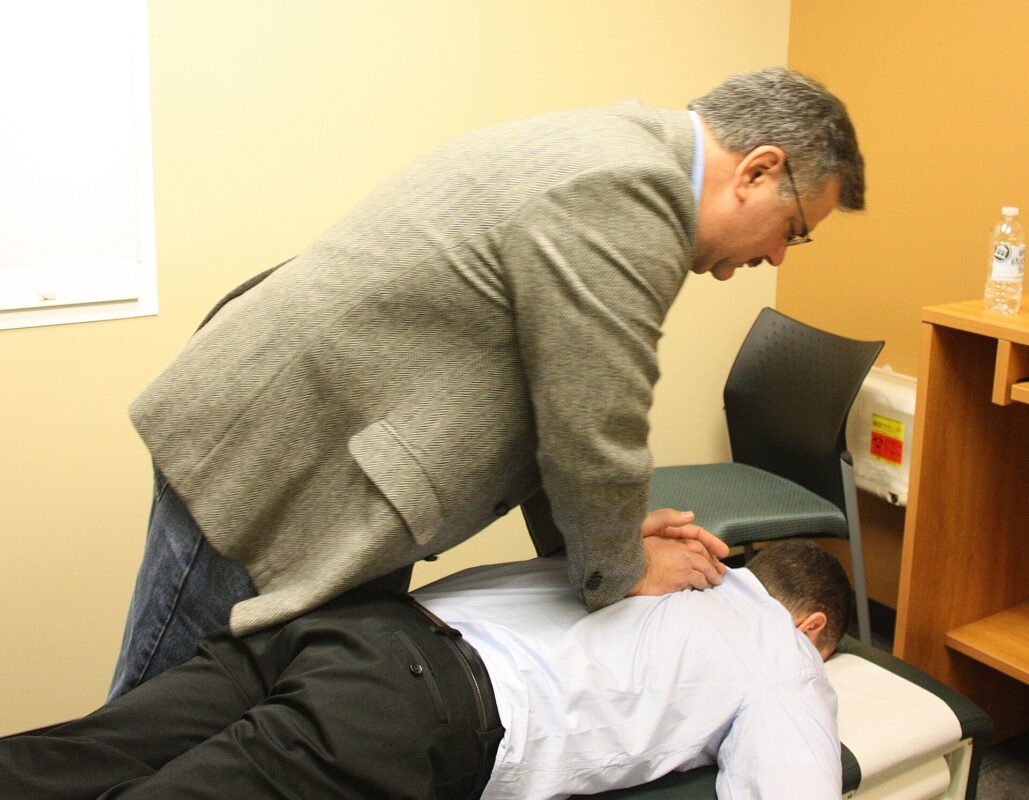
An adjustment is a specific, controlled movement to one joint, in one direction, at a speed your muscles can’t guard against. It aims to restore motion at the segment that stopped moving and to interrupt the protective pattern around it.
| What it does | What it does not do | |
|---|---|---|
| Adjustment | Restores motion at a stuck segment and reduces protective tension | Fix a herniated disc or reverse degeneration seen on an MRI |
| The pop | Gas releasing from joint fluid, like cracking a knuckle | Prove the adjustment worked; many patients get relief with no pop |
| Chiropractic care | Pairs with exercise and movement to keep the motion | Replace surgery or medication when a case needs them |
That is why the exam comes first. The joint that hurts is rarely the one that started the problem, and treating only the sore spot is how recurring trouble pops up in slightly different places. We look for the segment that stopped moving, then check the ones that picked up the slack. See Dr. Mina’s pages on low back pain in Orange and low back pain in Culver City, or read our earlier article on chiropractic care for lower back pain.
What makes the result hold
An adjustment restores motion in the room. Keeping it takes two things:
Daily movement
A specific stretch or small habit change that keeps the joint from locking up again. Some patients do about forty seconds a day.
Rebuilding load
Getting your body used to carrying things again instead of being protected from everything.
Patients who do the between-visit work often keep their adjustment for months. Patients who skip it tend to come back every couple of weeks. Same adjustment, different outcome.
How often will you need to come in?
It depends on your age, how long the restriction has been there, how much of your day is spent seated and whether you do the home work. Some patients come weekly for a stretch, then taper off. Others come monthly, and others twice a year when something flares. We will not quote a fixed number before examining you.
When to get medical care first
Seek same-day medical care if back pain comes with numbness in the saddle area, loss of bladder or bowel control, or sudden weakness in both legs.
Where to be seen
Orange: La Veta Wellness
845 W La Veta Ave, Suite 106, Orange, CA 92868
Monday, Wednesday, Friday, 9 am to 7 pm
Call (657) 479-3909
Culver City: Culver Spine
5601 W Slauson Ave, Suite 266, Culver City, CA 90230
Call (424) 228-4638
Recurring back pain: common questions
Why does my back keep going out every few months?
Usually a joint in your spine or pelvis has stopped moving through its full range and nearby muscles compensate. The pain eases, but the restriction stays, so the same movement triggers it again.
Does the popping sound mean the adjustment worked?
No. It is gas releasing from joint fluid. Many patients regain movement with no pop, and what counts is restored motion at the stuck segment.
How many visits will I need?
It depends on how long the restriction has been there, your age, your sitting time and your home exercises. Plans range from weekly for a stretch to a couple of visits a year, and a number is only given after an exam.
Can chiropractic care fix a herniated disc?
No. An adjustment does not fix a herniated disc or reverse degeneration seen on an MRI, and it does not replace surgery or medication when they are needed.
When should I skip the appointment and go to the ER?
If back pain comes with saddle-area numbness, loss of bladder or bowel control, or sudden weakness in both legs, get same-day medical care.
Let your next three months be about your plans, not your back
The next step isn’t a lifelong commitment. It’s an assessment: how your spine and joints move, which segment has been stuck, and an honest answer on whether chiropractic care fits, including when it doesn’t.
Questions first? Call Orange at (657) 479-3909 or Culver City at (424) 228-4638, or send us a message. Bring the pattern: when it catches tells us more than the pain does.
